PLC
Publications Standing
Firm By Parker T. Williamson, Executive Editor |
||
|
||
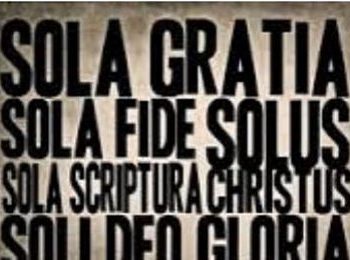
Parker T. Williamson, Presbyterian minister and executive editor of The Presbyterian Layman, dug deeply into the archives to capture the biblical, political and social debate leading to the adoption of the Nicene Creed, which continues today as a universal confession of Christianity. Williamson's narrative of the ancient debates reads like contemporary Presbyterian controversies over ordination standards, ReImagining God, inclusiveness and multiculturalism. But Standing Firm does not leave its readers in the slough of despond over the course and future of the Presbyterian Church. To the contrary, it affirms the Reformed standards grace alone, faith alone and Scripture alone as God's ever-powerful means of standing firm against the cultural backwashes that seem to threaten the peace, purity and unity of the Church. Standing Firm is thrilling testimony that even the gates of hell will not prevail against God's elect. Read the Introduction and place your order today by calling 1-800-368-0110. Single copies are $12.00; bulk copies in orders of 10 or more are $6.00. Handling and shipping costs included. Introduction
Our Story Defenders and critics of the conference locked horns in a nine-month struggle that many feared would tear the denomination apart. Denominational officials openly wondered if the organization having already lost more than one-third of its membership in less than three decades could survive the controversy. Critics were accused of undermining the peace and unity of the Church. But was it the controversy surrounding the Re-Imagining conference that damaged the Church, or was it the conference itself? Those who have ruled Americas mainline Protestant denominations since the early 1960s argue that it is the critics who have caused the harm. Central to their thesis is the post-Enlightenment assumption that human beings entertain numerous religious affections, none of which may claim universal validity. The Gospel, in this view, has to do with building inclusive relationships that embrace all truth claims as equally valid. Thus, any event that polarizes people is, by definition, an offense to the Gospel and a blow to Church unity. Evangelicals (those who insist on the necessity of a personal relationship with Jesus Christ, who alone reconciles humanity to God) say that denominational officials have improperly framed the issues underlying the controversy. Religion, they claim, is essentially a matter of truth, and secondarily a matter of relationships. They remember Jesus words: "I am the way, the truth and the life. No one comes to the Father but by me." If we cannot affirm that truth, say the evangelicals, then any attempts by ecclesiastical conflict managers to build relationships are futile, for relationships not anchored in Gods revelation have more to do with politics than piety, and when put to the test they will not hold. In the pages that follow we will discover that this polarization between the proponents of faith as relationship and the proponents of faith as truth represents a false dichotomy, for in the Gospel truth and unity are inseparable. The Church has historically affirmed that the Trinity God the Father, God the Son, and God the Holy Spirit constitutes that indissoluble relationship that anchors all creation. The centerpiece of this relationship is the Gospel, that irreducible truth that Jesus of Nazareth is the Son of God, of one substance with the Father. In that essential union, truth and relationship are inextricably entwined. Historically, controversies that have swirled around the meaning and implications of the Gospel, far from damaging the Church, have contributed to its vitality. Like a refiners fire, intense theological debate has resulted in clarified belief, common vision, and invigorated ministry. In the pages that follow we will revisit an ancient Christian battlefield called Nicaea, in the hope that conflict-weary Christians of our time may gain strength from the struggles of their forebears, and reclaim the faith that emerged from that fourth-century contest. Part One will recall the Council of Nicaea. Why did a fight among the clergy pique the interest of a Roman Emperor, and what did he do to squelch it? Who were the contestants? What were their arguments? And how was this debate resolved? Woven through this historical narrative will be reflections on controversies that are currently raging in the Presbyterian Church (USA), for the issues that divide us today and the means we employ to assuage them are rooted in ancient soil. In Part Two we will examine the impact of Nicene theology on the development of modern science, the restoration of human community, the meaning of worship and the arts, and the search for unity among Christians. In Part Three we will trace the Churchs return to ante-Nicene ideas that emerged in Enlightenment philosophy and are currently in vogue among many church leaders. We will end our discussion in Part Four by identifying signs of hope, developments in the life of the Church that encourage us to believe that the lessons of Nicaea have not been lost, but are, in fact, being rediscovered by lively and growing faith communities. While illustrations of current theological controversies are drawn from the experience of the Presbyterian Church (USA), the organization whose activities Presbyterian Layman reporters have followed for three decades, they apply with equal validity to other "mainline" denominations in the United States, including the Episcopal Church, the United Methodist Church, and the United Church of Christ. The issues facing each of these groups are identical, for although we differ in matters of polity and doctrinal emphasis, we are all beneficiaries of Nicaea and we all face distortions of the truth it proclaimed. Visiting Nicaea involves more than focusing on one moment in the Christian past, for the issues debated by that Council emerge in every generation. Many religious themes that purport to be new ideologies promulgated by New Age enthusiasts, eco-theologians, and purveyors of the feminine divine, for example are merely modern versions of ancient aberrations. Those who know Nicaea have seen them all before. Viewing these ideas at their root and remembering how they were engaged by Christians in other times and places give us a valuable perspective for addressing their current manifestations. For members of the "communion of the saints," that body of believers called the Church that transcends all time and space, what happened at Nicaea is happening today. This story is our own. |
||
To order Standing Firm call 1-800-368-0110 Resources index · Home |
||
| Standing
Firm is great theology and history August 24, 1999 I recently purchased a used copy of Standing Firm [by Parker T. Williamson, executive editor of The Presbyterian Layman] and I am thoroughly enjoying its enlightening stance. I had to take a moment from my reading to say to the author that he has made "theology" more interesting to me than it ever was in seminary. In fact, I barely got a good grade in it. A chain of events led from my preaching this past Sunday on the lectionary text of Matthew 16: 13-20, subject, WHO IS JESUS TO YOU? to looking up "Presbyterians" on the Internet, their beliefs, doctrines, etc. Your book motivated all of that and it is continuing. You make the history of early Christianity easy to understand for me, especially the Christology of Jesus. For the past three years my congregation and the First Presbyterian Church congregation in Delaware, Ohio, have shared worship services. They come to us and we go to them. My congregation is the Zion African Methodist Episcopal Church of Delaware, Ohio. It gets better all of the time. Their Pastor is the Rev. Paul Randall. Thanks for the book. I am still reading it. I firmly believe that in today's religious climate, it is imperitive to "stand firm" on and in the Word of God. Knowledge of past church history is essential also in that process. Rev. Harold L. Turner |
||
To order Standing Firm call 1-800-368-0110. Resources index · Home |
||