
PCUSA study
clashes with views
of evangelical family researchers
By John H.
Adams
The Layman
Online
Wednesday,
April 30, 2003 While a
Presbyterian
Church (USA) study urges the denomination to move away from
theologically affirming traditional families, evangelical analysts are
saying just the opposite. They argue that the breakdown in traditional
families bears a high cost theologically, financially, politically and
socially.
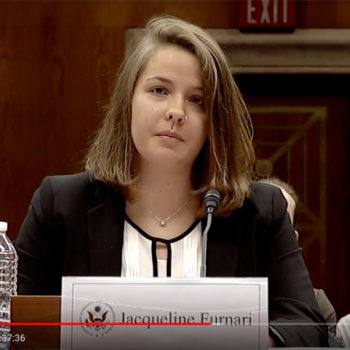
Dr. Susan Orr, the senior director of marriage and family at the Family
Research Council, outlines some of those concerns in a paper titled
"Single
Parenthood: Life Without Father." That paper and its endnotes
are posted on the council's Web site.
She cites census data that show that traditional families have declined
from a majority of U.S. households three decades ago to 25 percent
currently. "In 1960, only 4 percent of mothers were not married; by
1998, that figure had climbed to 40 percent," she says.
She says a number of factors has devalued marriage. Consequently, young
people "wonder why anyone should bother as the old Joni
Mitchell song goes, 'We don't need no piece of paper from the city
hall.' But we really cannot get away from city hall. City hall-or the
state and federal houses-inevitably get involved when families break
down or fail to form. What government currently does is subsidize
illegitimacy: federal and state welfare programs cost taxpayers 150
billion dollars each year, even in the wake of welfare reform; that is
money that subsidizes single parenting as the saying goes, you
get what you pay for."
Citing a number of polls, Orr says Americans are overwhelmingly
convinced that the "best place for children is a household with a
married mother and father."
The Presbyterian study, "Living Faithfully with Families in
Transition," urges Presbyterians to recognize "diverse"
families including homosexual couples and single mothers, with or
without children born out of wedlock as acceptable models of
God's purpose for families. The study, conducted by the Advisory
Committee on Social Witness Policy, will be presented to the 215th
General Assembly during its meeting in Denver on May 24-30.
The conclusions of the PCUSA study contrast dramatically with the
message of Orr and other evangelical analysts.
Orr's paper deals with children raised in single-family homes. Noting
that there are exceptions, she said research nonetheless paints a
general picture,
- "an outline of what life is like for most children in
single-parent families. When one compares these children with those
who grow up in an intact household, the picture that emerges is
quite startling. It is something that we have known for awhile, but
have been able to blame on other reasons. For quite some time, when
children faired poorly in single-parent homes, we blamed it on
economic issues poor children, most of them in single-parent
homes (which really means single-mother homes) are
disadvantaged economically. So the thought goes that they are not
going to fair as well when compared to their richer peers. There are
two problems with this theory. One, it assumes a rather determinist
worldview that everything important in life is material: If
you have the right stuff, if you will, you will excel. Of course,
having stuff is important, but it is not the most important thing.
The truly right stuff is incorporeal: love, a sense of belonging,
belief in God, virtue, and grace. The second problem with the theory
is that social science has now proven it to be absolutely incorrect.
With that assertion, Orr challenges one of the basic premises of
the Presbyterian study, which does contend that economic condition plays
the major role in determining whether a family will succeed. But Orr
said she does acknowledge economic deprivation:
- "We now have enough data, with sufficient controls in place,
that allow us to tease out the essentials, that is, what are the
determining factors that help or hinder children in excelling. The
picture is not pretty; but it is clear. Here is what the research
reveals about single parenthood. The first and most obvious effects
are financial:
- "These children are six times more likely to live in poverty
than those who grow up with both their parents. In 1997, only 10
percent of children in intact families lived in poverty; 49 percent
of children who had only a mother to rely on lived in poverty. Those
numbers get worse if we break it down by race: 55 percent of black
children and 66 percent of Hispanic children are living in poverty
if they live with a single mom. The children whose moms currently
receive (or ever received) welfare benefits are also more likely to
go to bed hungry. A recent study looking at mother-headed households
found that 15 percent of these families often went hungry.7
- "When it comes to the field in which I have done the most
extensive research, child welfare, the evidence on single parenthood
is even worse. Most families, of course, will never come into
contact with the child-welfare system because most parents do not
abuse or neglect their children. Most who do live in poverty and are
headed by a single mother. National studies have consistently found
a correlation between child abuse and single mothers. For example,
- "Children of single parents had a 77 percent greater risk of
being harmed by physical abuse, an 87 percent greater risk of being
harmed by physical neglect, and an 80 percent greater risk of
suffering serious injury or harm from abuse or neglect than children
living with both parents."
Orr acknowledges that "most single moms do not abuse their
children, but these children are still at a disadvantage. Children from
single-parent homes also endure adverse affects to their health, their
emotional stability, and their ability to achieve academically."
She cites studies that identify other "negative effects on children
of a broken or never-started family," including:
- School dropout rates that are twice as high as those of children
in traditional families.
- Rates of imprisonment are also twice as high.
- High suicide rates for young adults and adolescent boys.
- High divorce (double) rates after children reach adulthood.
- Earlier sexual intimacy outside of marriage.
- Delinquent behavior and use of illicit drugs or alcohol.
The plight of children can be improved through adoption, Orr
argues, a point that draws little attention in the PCUSA study. She
cited studies that showed that adopted adolescents "exhibit more
self-esteem and self-confidence;" "experience depression less
than children of single parents;" are "less likely to abuse
alcohol and engage in theft, vandalism, group fighting and weapon use."
The adopted children are also more likely to complete their education
and less likely to become single mothers themselves, she notes.
She concludes, "This research presents what we know in general
about single parenthood; it cannot predict how every child will turn
out, but by every standard social science can measure, children growing
up in a single-parent household are at greater risk for a host of
problems. Expectant single mothers deserve to know that."
Orr's paper does not focus on homosexual couples, whether with adopted
children or children from a previous heterosexual marriage. The Family
Research Council has produced a number of papers on that issue as well.
|