logo


There’s a little Calvin,
Luther in Dick Paul


By John H. Adams
The Layman
Volume 35, Number 1
Posted February 8, 2002

Richard E. Paul
Richard E. Paul
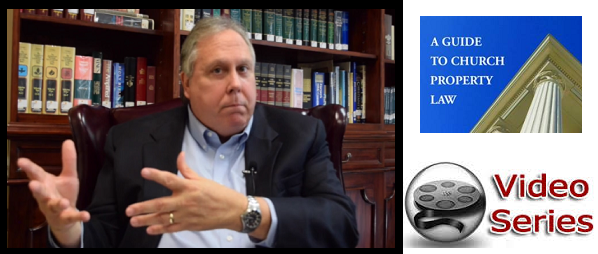
If Calvin and Luther had a meeting of minds, the result might have been someone like Richard E. “Dick” Paul, a Portland, Ore., lawyer and a director of the Presbyterian Lay Committee.

He is a thorough and reflective student of the Reformed faith (Calvin) with a feisty spirit (Luther) when affairs in the Presbyterian Church (USA) stray from that heritage.

Some of that is bound to be inherited. Paul is the grandson of two preachers – one a Presbyterian, the other a Lutheran.

Paul’s own faith is clear and straightforward. “Jesus is a friend with whom I walk and talk daily,” he says. “I wish I could say I always took the good advice He gives me, but I can’t. I like to think I’m trying to do my best. Unlike most friends, He’s very forgiving and this is my greatest comfort.”

From that grounded relationship with Christ, Paul is what many would describe as a pillar in the church. He is the long-time clerk of the session of Calvary Presbyterian Church in Portland. He currently serves as chairman of the Pastor Nominating Committee. He taught Sunday school for 25 years and served as superintendent of Sunday school.

He also teaches a Bible study that meets on Friday nights. The theme of that study is spiritual warfare – an issue that Paul believes is relevant for today, both within and outside of the Presbyterian Church (USA).

Paul has also been active in the Presbytery of the Cascades, currently serving as chairman of the presbytery’s permanent judicial commission.

“The direction of the church has been more political and social than spiritual,” he says. “The great ends of the church got lost.”

Paul believes that the energy and attention absorbed in the long-running debate over sexuality is one reason for the denomination’s inability to focus on evangelism and mission.

He has been involved in that battle since well before presbyteries added the “fidelity/chastity” ordination standard – G-6.0106b – to the Book of Order in 1996.

Eight years ago, he was the counsel for Hope Presbyterian Church in its action against another Presbyterian church that elected a homosexual deacon. Paul handled the case before the presbytery, synod and General Assembly permanent judicial commissions – eventually winning a ruling that the gay deacon was ineligible.

Paul became interested in the renewal work of the Presbyterian Lay Committee in the mid-1960s, shortly before the adoption of the Confession of 1967. The committee was begun by prominent businessmen and church elders who were concerned that the Confession of 1967 reflected a diminished commitment to Biblical and Reformed faith.

It sponsored regional meetings, including one in Oregon where J. Howard Pew, businessman and philanthropist, was the speaker.

“The result of that meeting is that we began a Portland chapter of the Presbyterian Lay Committee,” Paul says.

In 1980, Paul became a national director of the Presbyterian Lay Committee. After serving four years as a member of the communications committee, Paul became that committee’s chair in January. The committee oversees The Layman, The Layman Online and the publication of books and other resources for renewal.

Paul is a graduate of Lewis and Clark College, with a law degree from the Northwestern College of Law. He is a partner in Jordan, Caplan, Paul & Etter.

He and his wife, Edna, have two daughters.

Paul has been named director emeritus of the Presbyterian Lay Committee.
Respond to this article
Home · News · PLC Publications · The Presbyterian Layman
Online Reviews · Archives · History of the Lay Committee · Feedback · Links